Mon-Thurs 8:00 AM - 4:30 PM | Fri 8:00 AM - 2:30 PM
Fall puts the first real strain of the year on a home’s wiring: heat pumps start cycling, space heaters come out of storage, and wet fallen leaves settle over outdoor receptacles. At D C Electric of Raleigh, we know that most of the service calls electricians take between October and December trace back to issues that were already visible in September. A couple of hours spent performing seasonal checks now prevents the kind of sudden outage or hazard that shows up during cold snaps or right around major holidays.
Here are six practical maintenance steps worth doing before the first hard freeze, plus the warning signs that mean it is time to stop troubleshooting and call a professional.
Wet leaves packed against an exterior receptacle hold moisture directly against the gasket, and by late autumn that moisture works its way behind the cover plate where it corrodes wiring terminals. Walk the perimeter of your property and clear leaves, soil, and overgrown vegetation away from outlets, the main meter base, the exterior AC disconnect box, and any low-voltage transformer units mounted low on exterior walls.
While checking your exterior walls, verify that every outdoor cover is a weatherproof in-use bubble cover rather than a flat flip-lid plate. Flat lids cannot close while a cord remains plugged in, which leaves the entire connection wide open to driving rain and snow melt.
If you plan to add power for holiday light displays or pathway lighting, contacting D C Electric of Raleigh for an outdoor outlet installation in Raleigh, NC keeps those circuits weather-rated and on GFCI protection from day one. Taking time to seal small gaps between the outlet box and your home’s siding with exterior silicone caulk also prevents chilly drafts and moisture from entering your wall cavities.
Ground Fault Circuit Interrupter (GFCI) and Arc Fault Circuit Interrupter (AFCI) devices wear out over time, usually lasting between seven and fifteen years. A failed or dead protective device looks identical to a fully functioning one, giving a false sense of safety. Walk through your home and firmly press the TEST button on every GFCI and AFCI outlet and breaker located in the kitchen, bathrooms, garage, basement, crawlspace, and exterior walls. Power should cut off instantly, and pressing RESET should restore it smoothly.
If a device refuses to trip, will not reset, or trips the moment you restore power with nothing plugged into it, replace it right away. The Electrical Safety Foundation International recommends monthly safety testing, though homeowners who manage it at least twice a year during spring and fall routine maintenance stay well protected. In older homes where crawlspaces or garages lack GFCI protection altogether, retrofitting those branch circuits is one of the most cost-effective upgrades you can make to protect against severe shocks and equipment damage.
A standard 1,500-watt portable space heater draws roughly 12.5 amps of continuous current, consuming nearly the full capacity of a standard 15-amp branch circuit. Plug one into a bedroom circuit already running a television, ambient lighting, and a phone charger, and the breaker will trip, or worse, loose wire connections will heat up inside the junction box without tripping the breaker.
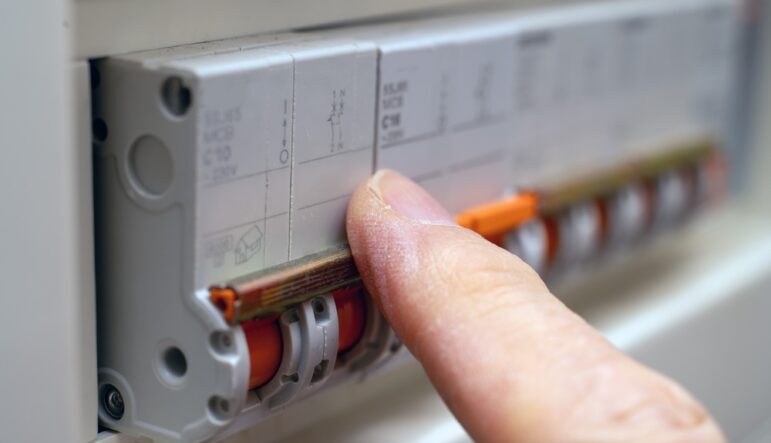
Before cold weather forces heating equipment back on, perform three quick checks at your main breaker panel:
Homes still running an older 100-amp service while operating central heat pumps, electric ranges, and electric vehicle chargers are frequent candidates for service panel upgrades. D C Electric of Raleigh often assists homeowners in upgrading these aging systems so their electrical service safely matches modern household power demands. Autumn is a far easier time to schedule panel work than during the middle of winter when heating demands peak.
Pull every extension cord, temporary power strip, and decorative light string out of storage well before you plan to use them. Run each cord through your hands from end to end, feeling for cracked or brittle insulation, flattened spots where heavy furniture rested, loose or bent plug blades, and any light string featuring cracked or missing bulb sockets. Throw away questionable cords immediately, as wrapping damaged insulation in electrical tape does not restore proper safety standards.
Outdoor extension cords and light strings require a W rating or clear outdoor-use designation stamped directly on the cord jacket, and all of them must connect to GFCI-protected receptacles. Heating appliances and seasonal holiday decorations account for a major share of winter home fires every year according to seasonal safety reports from the National Fire Protection Association. Always keep space heaters at least three feet away from bedding, curtains, furniture, and paper items, and plug high-draw heating units straight into a wall outlet rather than a power strip or light-duty extension cord.
Kitchen exhaust hoods, bathroom ventilation fans, and ceiling fans work continuously throughout the colder months to manage interior moisture and redistribute warm air. Dust and lint buildup on fan blades or inside motor housings forces small motors to work harder, generating excessive heat that can ruin the fan or create an ignition source inside wall and ceiling cavities. Remove exhaust fan covers in your kitchen and bathrooms, clean away accumulated dust, and spin the fan blades by hand to make sure they move freely without grinding.
Reversing your ceiling fans to run clockwise at their lowest speed during fall helps push warm air that rises to the ceiling back down into living spaces. This small adjustment improves indoor comfort while reducing the load on your main heating system. While checking your fans, inspect the light fixtures attached to them for correct bulb wattages, as installing bulbs that exceed a fixture’s rated limit breaks down wire insulation inside the socket over time.
While routine testing and visual inspections are easy to handle on your own, certain electrical issues demand professional equipment and training. Call a qualified contractor promptly if you encounter any of these symptoms:
Scanning online directories or searching for top local electrical contractors is a good way to gather options, but always verify license details directly with your state licensing board before scheduling service. Many homeowners looking for a licensed electrician in Durham, NC rely on experienced technicians from D C Electric of Raleigh because prompt diagnostic response times and verified credentials matter when safety is on the line.
If your seasonal walkthrough revealed a warm wall outlet, a dead GFCI receptacle, or an overloaded service panel, D C Electric of Raleigh can evaluate the issue and provide clear repair options. Reach out today to schedule your fall safety inspection before cold weather arrives.