Mon-Thurs 8:00 AM - 4:30 PM | Fri 8:00 AM - 2:30 PM
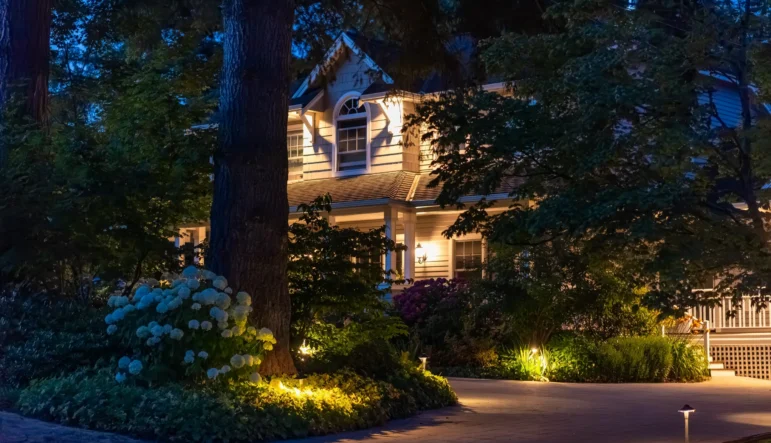
Most yard accidents happen in a narrow window: the 15 or 20 feet between where a car door closes and where a hand finds the front door. Good outdoor lighting closes that gap by putting light on walking surfaces and grade changes instead of spraying it into the air. The fixes are usually cheap, and the ones that matter most take a single evening to plan.
Whether you need low-voltage path lights to highlight hidden steps, motion sensors for dim entryways, or professional hardwiring to guarantee reliability, D C Electric of Raleigh can help safely transform those hazardous shadows into a well-lit, welcoming path home.
Pick a moonless night, turn off every exterior light, and walk your normal routes: driveway to door, back door to grill, gate to shed. Carry your phone but keep the flashlight off so your eyes adjust the way a guest’s eyes would. Mark the spots where you slow down, reach for a railing, or squint.
Those hesitation points are your project list, and they are rarely where people assume. In most homes the trouble spots cluster in four places:
Falls send millions of older adults to emergency rooms every year, and the CDC’s fall injury data shows how often those falls happen at home. Uneven surfaces you cannot see are a big part of that.
A common mistake is mounting one bright floodlight high on the house and calling the yard covered. That creates hard shadows behind shrubs and steps, so the exact places you need to see go darker than before. Low, spread-out light beats one powerful source almost every time.
For pathways, space path lights roughly 6 to 8 feet apart and stagger them side to side rather than lining them up like a runway. Each one only needs about 100 to 200 lumens; anything brighter tends to blind you and ruin your night vision. Step lights and recessed riser lights are even lower, often 12 to 50 lumens, because the surface sits inches away.
Entry areas want more. A pair of wall sconces at 400 to 800 lumens each, mounted about 66 inches off the landing, gives enough light to read a package label and find a key without throwing glare into a visitor’s eyes.
A light that turns on is not proof the circuit behind it is safe. Older yards often have direct-burial cable that was never deep enough, splices buried in a coffee can, or a receptacle by the patio with no ground fault protection. Those setups pass the eye test and fail the moment water gets involved.
A few rules worth knowing before you dig or add anything:
Voltage drop is the quiet killer in long low-voltage runs. If the lamps at the far end of a 150-foot run look yellow and dim compared to the first three, the wire gauge or the transformer tap is wrong, not the bulbs. A homeowner can swap fixtures safely; sizing transformers, correcting buried runs and adding circuits is work for the best residential electrician in Raleigh or a licensed pro in your area.
The cheapest outdoor lighting fixtures usually fail at the gasket, the lens or the stake, not the bulb. Thin stamped aluminum and brittle plastic crack after a couple of freeze cycles, and once water sits in the housing the socket corrodes. Solid brass, copper and powder-coated cast aluminum cost more up front and often last three to four times longer.
Look for an IP65 rating or higher on waterproof outdoor lights, sealed silicone gaskets, and integrated LED modules rated for 40,000 to 50,000 hours. LED sources also pull roughly 75 percent less energy than the halogen lamps they replaced, according to the U.S. Department of Energy. If you shop by color temperature, 2700K to 3000K reads warm and natural against brick, siding and plantings.
Mixed color temperatures are the most common aesthetic mistake. One cool blue-white lamp in a row of warm ones makes an otherwise good exterior lighting scheme look broken. Buy from one family or one series when you can.
Lights that depend on someone remembering to flip a switch are dark exactly when they matter. An astronomical timer at the transformer adjusts sunset to sunrise through the year, and photocells handle the same job for individual fixtures. Motion sensors belong on side yards, detached garages and back doors where constant light is not needed.
A practical setup for most houses: path and step lights on a dusk-to-dawn schedule, accent uplights on a timer that shuts off around 11 p.m., and motion-activated security lights at the corners. That keeps the front of the house welcoming without lighting the neighborhood all night.
Aim matters as much as timing. Shield floodlights so the beam lands on the ground within your property line, which cuts glare, reduces light trespass and keeps your own night vision intact.
Beyond safety, a handful of moves cover most modern outdoor lighting ideas for the front of a house without turning the yard into a stadium:
Design and safety usually agree with each other. The same layered plan that makes a landscape look finished is the one that removes the shadows people trip in, which is why professionally installed outdoor lighting in Raleigh and elsewhere starts with a night walk rather than a catalog.
If your walkway has a dark stretch, your patio receptacle has no GFCI, or half your landscape lights have quit, a licensed electrician can sort out the wiring and the layout in one visit. Contact D C Electric of Raleigh today to schedule a walkthrough and a written estimate.